
Banalité in English
Reviewed/Translated by John Elkhoury
Like all my music reviews, I start with a French to English translation then critique the lyrics and style below.
COMPREHENSION DIFFICULTY: MEDIUM



French Christmas Songs
| French Christmas Songs |
Masculin ou Féminine?
Is it masculine or Feminine? How do I know the gender of a word in French? Let's be honest, it's annoying to try and remember a noun's gender after you've forgotten it. I remember back in my early French 1 days, my teacher simply told us that the genders must be put to memory - that's the only way to master them. It's true, if you use the word enough, you will remember the gender. But, she failed to tell us that there is a surefire way to know the gender of a word - working around 95% of the time!
Of course, most rules have to have that ONE exception. But reasonably speaking, if you put these 40 noun endings to memory then you'll be on your way to correct French genders in no time! The following 40 endings are found in over 75% of French nouns (13,400). Accents were ignored when creating this.
Of course, most rules have to have that ONE exception. But reasonably speaking, if you put these 40 noun endings to memory then you'll be on your way to correct French genders in no time! The following 40 endings are found in over 75% of French nouns (13,400). Accents were ignored when creating this.
Comment Policy
Hey guys, I created this post because I truly encourage commenting! Websites are rather boring and one-sided if I'm the only one discussing French topics; you guys may have different opinions or cool experiences that are worth sharing.
With that being said, comments can be made ANONYMOUSLY, and do not require a subscription of any type. If you plan on commenting on a few posts and want to be "well-known" within our comment section, then take the time and create an account. After a comment has been made, it will be sent to me for moderation - so check back within a day or two to see your comment appear.
My Comment Moderation Process:
I'm sorry but I will not tolerate....
- Spam of any sort within comments.
- The use of profanity or sexual innuendos.
- Trolling.
- Advertising other products or websites for profit.
- Unconstructive criticism aimed at one of my articles/website. A comment that states: "you made a spelling error in the second paragraph" is much better than "you're spelling equates to that of a 2nd grader". Please if you want to criticize or bash an opinion, present your own argument within the same comment.
You can assume that your comment has been moderated/censored if 7 days have passed and your comment has not appeared under the post. Thank you for respecting my comment policy, now go comment on an article!
French Phonetics
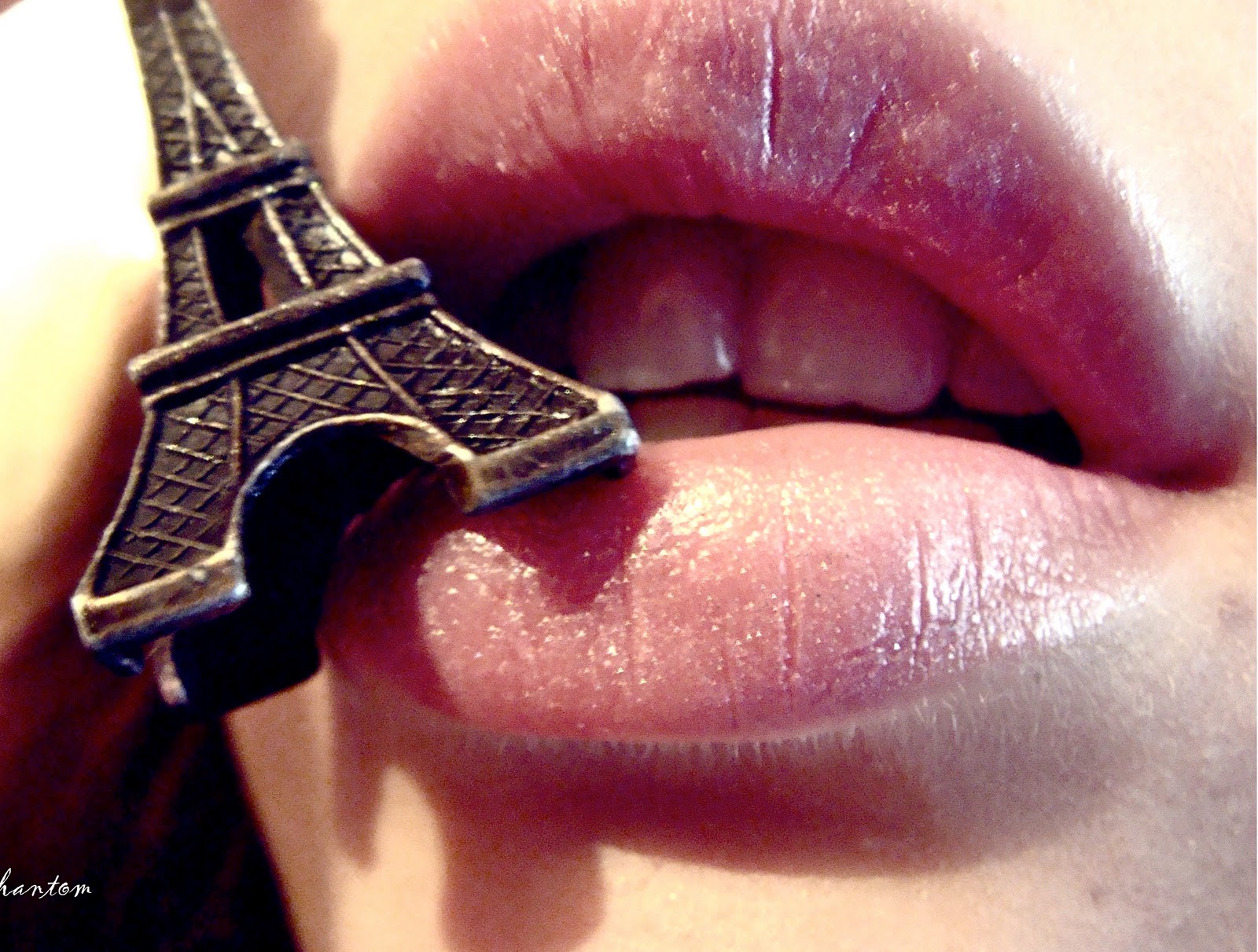 |
| French Phonetics at the tip of your lips. |
Phonology and Phonetics are two different fields in the science of linguistics that study how people make sounds and pronounce words. Phonology (and phonetics) should be interesting because knowing how the French make their sounds could help French language learners across the globe acheive a pronunciation "non-marquée", that perfect pronunciation. The whole reason people have foreign accents in the first place is because their mouth cannot adjust to the correct ways of creating certain phonemes! In this extensive article, I will introduce many cool topics, for example: Did you know that in French, syllables have the tendancy to end with a vowel? This is called open syllabication. While in English, most of our words like to end with a consonant (closed syllables).
First I will present the French phonetic alphabet and all the sounds that French contains (a few of them do not exist in English), so that you can leave here pronouncing words like a champ. Then, I'll go into depth with some differences between English and French pronunciation. We'll touch upon why it sounds like French speakers are "singing" when they speak, and also where do English speakers have problems with pronunciation. It would help to have a good foundation in French to understand some of the examples. French phonetics and pronunciation here at FrenchCrazy goes in depth, so please pay attention :)
What is a phonetic alphabet and why is it important? Well French and English are two types of "alphabetic" languages, meaning we use combinations of letters to create words and sounds. Now, you may be saying "no duh", but I specify this because there are other types of languages; take Hebrew, a syllabic language where you pronounce the syllables in the same manner as what is written on the paper. Linguists use a phonetic alphabet because a word's spelling is ambiguous. We as native speakers implicitly know the "rules" associated with pronouncing a word, but foreign learners need to familiarize themselves with the new system. For example, the words: pair, bear and share are all composed of the same vowel sound phonetically, BUT they are spelt completely differently.
What about words like phone, fish, enough? Where all the sounds constitute an /f/ but are spelt completely differently. In English, spelling is not as transparent as language such as Italian. French is the same way.
Here's another phonetic example of an ambiguous English word pronunciation:
All the following words start with the letter's "CA", but when you say them out loud, pay attention to how each one is different.
CAuse
CAmp
CAstle
CAve
Each one sounded different (if you're a native speaker of English at least). Cause starts off with "kuah", camp sounds like "kaam", castle has a more distinct "kaah" to it, and cave begins with something equivalent to "kay". By using a phonetic alphabet, the differences in sounds are clear even though the word's spelling is not. Get the importance? IPA alphabet = reliable, spelling = unreliable. Now look at the words from above transcribed into the English phonetic alphabet:
CAuse = /kôz/
CAmp = /kæ̃mp/
CAstle = /'kɑːsl/
CAve = /kav/
See how by using the phonetic alphabet, you realize all of the sounds are different despite the same spelling! Now pay attention, here comes the French phonetic alphabet.
Subscribe to:
Posts (Atom)